A mommy makeover is one of the most requested body contouring plans in plastic surgery, and it’s also one of the most misunderstood. It isn’t a single operation with a set list of steps, and it isn’t only for people who have given birth. The term simply describes a combination of breast and abdominal procedures chosen to address concerns that often show up after pregnancy, weight change, or aging. What that combination looks like is different for every patient, which is exactly why the planning conversation matters more than the label.
Key Takeaways
- There is no standard mommy makeover. The term covers a combination of breast and abdominal procedures, not a fixed operation.
- You don’t need to have been pregnant. The same concerns follow weight gain, weight fluctuations, and aging.
- Breast planning starts with position and volume. Lift, increase, decrease, or some combination, with implants or fat grafting when volume is being added.
- Abdominal options are just as varied. Mini tummy tuck, full abdominoplasty, extended abdominoplasty, and in select cases a reverse abdominoplasty.
- More procedures does not mean a better result. The right plan is matched to your anatomy, your priorities, and your goals.
What Does a Mommy Makeover Actually Mean?
In general, the term refers to some combination of procedures that address both the breasts and the abdomen. Those concerns are common after one or more pregnancies, but they aren’t exclusive to pregnancy. They can also follow aging, weight gain, or simple weight fluctuations, and they show up in all types of patients.
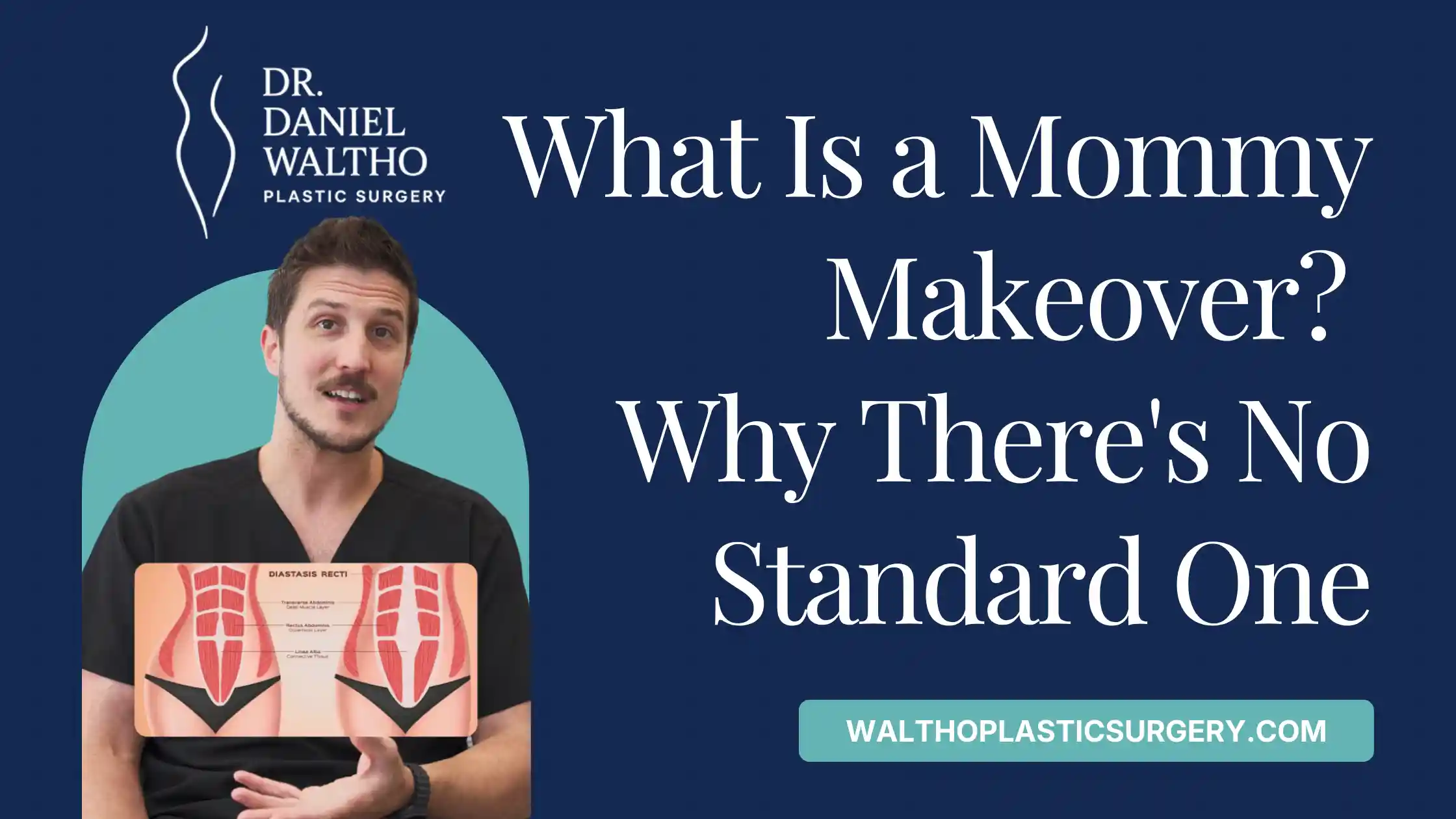
The concerns themselves tend to fall into a short list. On the breasts, it’s usually volume or position. On the abdomen, it’s usually skin laxity or separation of the core muscles, known as diastasis recti. That muscle separation is more common than most people expect. In a prospective study of 300 first-time mothers published in the British Journal of Sports Medicine, diastasis recti was present in 60.0 percent of participants at 6 weeks postpartum, 45.4 percent at 6 months, and 32.6 percent at 12 months (British Journal of Sports Medicine, 2016).
Stretched skin and separated muscle don’t respond to diet or training the way fat does, which is why so many patients arrive already frustrated. They’ve done the work and the shape hasn’t followed. Surgery addresses a different problem than the gym does.
The Breast Half of the Plan
Before any decision about technique, there are questions that have to be answered on examination. Do the breasts need to be lifted? Does the volume need to be increased or decreased? And if volume is being increased, is that a matter of implants, fat grafting, or both?
Those answers lead to very different operations:
- Breast lift when position is the main concern and there’s enough volume to work with.
- Breast augmentation when volume needs to be restored, using implants or fat grafting.
- A lift combined with implants when both position and upper volume need attention.
- Breast reduction when volume is the source of discomfort rather than something to add to.
For scale, breast augmentation was the second most common cosmetic surgical procedure in the United States in 2024 at 306,196 procedures, with breast lift at 153,616, according to the American Society of Plastic Surgeons annual report (American Society of Plastic Surgeons). Popularity is not a recommendation, though. Two patients with similar histories can need opposite operations.
The Abdominal Half Has Just as Much Variation
Abdominal planning follows the same logic. There’s a range of procedures, they’re not interchangeable, and the choice depends on where the skin laxity sits and whether the muscles need repair.
Mini tummy tuck
Some patients benefit from a mini abdominoplasty, which addresses a limited area below the belly button. It can be a good fit for a poor C-section scar or mild lower abdominal redundancy, where a full procedure would be more than the anatomy calls for.
Full tummy tuck
Most patients seeking abdominal contouring benefit from a full tummy tuck, which treats the full height of the abdomen and allows repair of separated core muscles. Abdominoplasty was the third most common cosmetic surgical procedure in the United States in 2024 at 171,064 procedures (American Society of Plastic Surgeons).
Extended tummy tuck
When laxity continues around the flanks, an extended version of the procedure carries the correction further around the sides, often with liposuction for contour refinement.
Reverse tummy tuck
In certain patients, a reverse abdominoplasty is the better answer, particularly when upper abdominal laxity is the issue and it can be addressed alongside a breast procedure. It’s a less common choice, and it’s selected on anatomy rather than preference.
Why More Procedures Doesn’t Mean a Better Result
This is the part patients most often get backwards. Adding procedures doesn’t improve a result on its own. The right combination has to be tailored to the individual patient, their anatomy, their priorities, and specifically their goals. A plan that looks impressive on paper can still miss what actually bothered the patient in the first place.
Combining procedures is common and well studied. A comparative analysis of 58,756 cases published in Aesthetic Surgery Journal found that combining abdominal and cosmetic breast surgery did not significantly increase 30-day complication rates compared with abdominal procedures performed alone, at 9.40 percent for combined procedures versus 9.75 percent for abdominal procedures (Aesthetic Surgery Journal, 2015). Complication rates were higher than for breast surgery performed on its own, which is a reminder that combining operations is a clinical decision, not a package deal.
Suitability depends on your health, the extent of each procedure, and total operating time. That assessment is individual, and it’s one of the reasons the examination matters as much as the conversation.
What to Expect From the Consultation
A useful mommy makeover consultation starts with how you want to look and feel, not with a procedure name. From there the plan is built through examination and discussion. At Appleby Plastic Surgery in Burlington, the private accredited surgical facility Dr. Waltho built with his colleagues, you meet directly with your surgeon, tour the space, and leave with a specific plan rather than a brochure.
Questions worth asking at that appointment:
- Based on my examination, which breast procedure do you recommend, and why that one?
- Do my abdominal muscles need repair, or is this primarily skin?
- Is a mini, full, extended, or reverse abdominoplasty the right fit for my anatomy?
- Should these procedures be combined in one surgery, or staged?
- What is the expected recovery, and what does the first two weeks look like?
- What would you advise against in my case, and what are the risks?
Dr. Daniel Waltho is a board-certified plastic surgeon in Burlington with an FRCSC in Plastic Surgery, a staff plastic surgeon at Oakville Trafalgar Memorial Hospital, and an adjunct assistant clinical professor at McMaster University. You can read more about his training and hospital appointments on the about Dr. Daniel Waltho page, or review the full mommy makeover procedure page for treatment goals, recovery stages, and before and after expectations.
Frequently Asked Questions
What procedures are included in a mommy makeover?
There’s no set list. A mommy makeover combines breast and abdominal procedures selected for the individual patient, usually a breast lift, augmentation, or reduction paired with a mini, full, extended, or reverse abdominoplasty. Liposuction is often added for contouring. The combination is decided at consultation after examination.
Do you have to have given birth to get a mommy makeover?
No. The name refers to a common pattern of concerns, not a requirement. Breast volume or position changes and abdominal skin laxity or muscle separation also follow aging, weight gain, and weight fluctuations. Patients who have never been pregnant are candidates for the same combination of procedures.
Is it safe to combine breast and abdominal surgery in one operation?
Often, yes. A comparative analysis of 58,756 cases in Aesthetic Surgery Journal found combining abdominal and breast procedures did not significantly raise 30-day complication rates versus abdominal surgery alone. Suitability still depends on your health, the extent of each procedure, and total operating time, assessed individually.
What is the difference between a mini tummy tuck and a full tummy tuck?
A mini abdominoplasty addresses a limited area below the belly button and suits mild lower abdominal redundancy or a poor C-section scar. A full abdominoplasty treats the entire abdomen and allows repair of separated core muscles. They aren’t interchangeable, and the choice is based on anatomy.
How much does a mommy makeover consultation cost in Burlington?
A cosmetic consultation at Waltho Plastic Surgery is $150 plus HST, and the fee is waived for breast augmentation and abdominoplasty consultations. The appointment is a face-to-face assessment with Dr. Waltho covering your options, candidacy, expected results, recovery, and next steps.
Let’s Build a Plan Designed Around You
If you’re considering a mommy makeover, the most useful next step is a detailed discussion and examination with your surgeon so the plan is matched to your anatomy and your goals rather than to a label.
Clinic: Appleby Plastic Surgery, 5045 Mainway, Unit 110, Burlington, Ontario L7L 5H9
Phone: (905) 315-1711
Hours: Monday to Friday, 8 AM to 5 PM
Contact us today to book your consultation with Dr. Waltho, and let’s make a plan that’s designed around you.